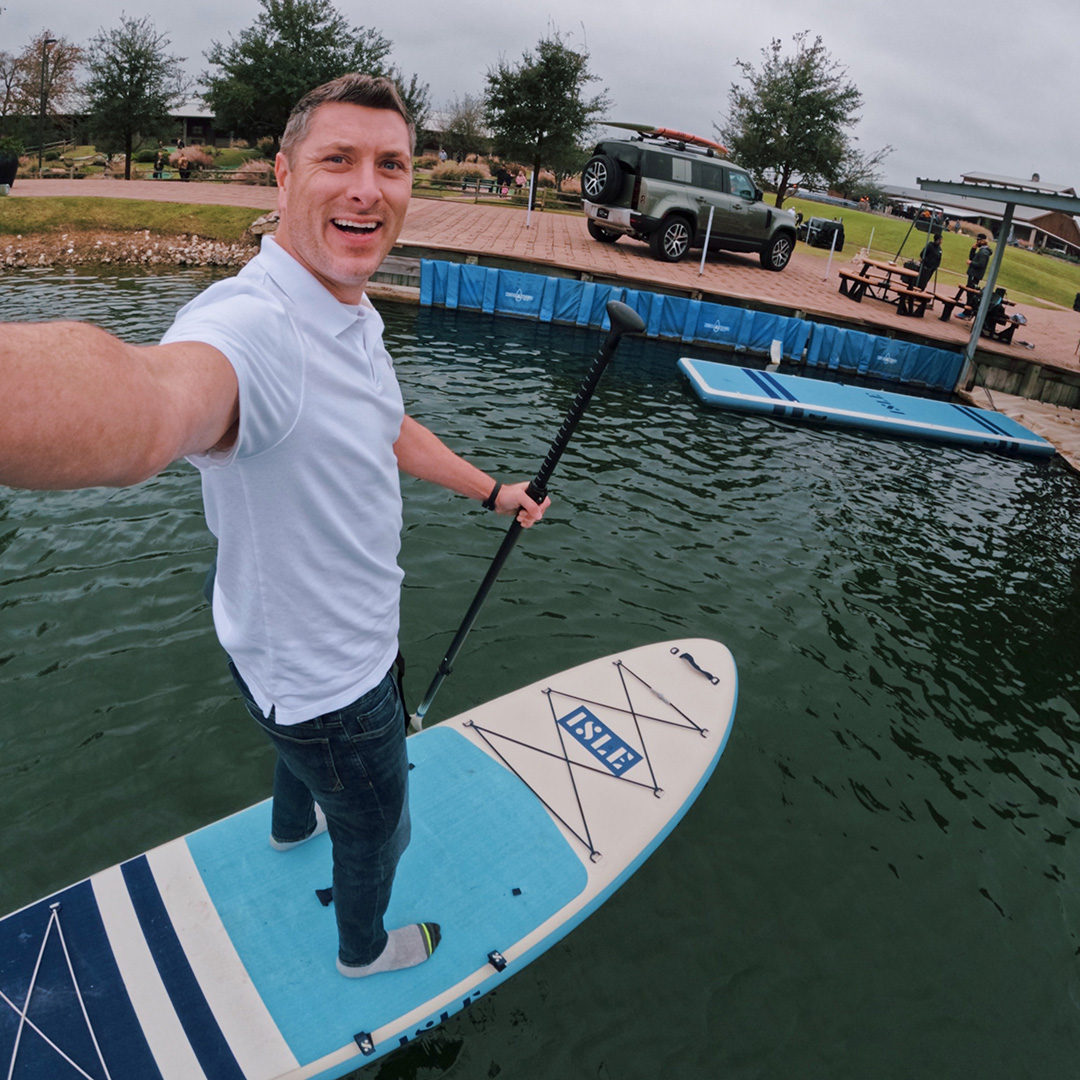
Like a lot of people, I bought a stand up paddle board and only used it once.
At the time, I had every intention of getting out on the water all summer long. But between one of the hottest summers on record, weeks of smoky skies from forest fires, and starting a new job that consumed most of my free time, my paddle board ended up spending more time in storage than on the lake.
That changed earlier this year during a trip to Maui.
We rented paddle boards for a few days and ended up spending hours on the water every single day. It reminded me how relaxing, fun, and surprisingly addictive paddle boarding can be. By the end of the trip, I knew I wanted to make more time for it once I got home.
Buying My First Paddle Board
When I originally bought my board, I went with an inflatable SUP from Amazon. There are a ton of options available now, and many of them have thousands of positive reviews for around $200. If you watch for sales, you can often find complete kits for even less.

Mine ended up costing about $220 delivered after tax, which honestly felt like a great value considering everything included in the package.
Most inflatable paddle board kits come with:
- A collapsible paddle
- Hand pump
- Carry backpack
- Safety leash
- Repair kit
- Removable fin(s)
For someone just getting started, these kits are more than enough to hit the water right away.
Tips for First-Time Paddle Boarders
If you’re brand new to paddle boarding, here are a few things that helped me:
Start on Calm Water
Your first trip will be much more enjoyable on a calm lake or protected bay. Wind and boat wakes can make balancing frustrating for beginners. Try early morning if you can as the water will usually be at its calmest.
Don’t Rush to Stand Up
When you first push off the dock or shore, start by paddling on your knees for a few minutes until you get comfortable. You’ll get a feel of the board’s stability and a sense of how it moves through the water and under your body.
Stand Up in One Motion
Once the board feels stable and you’re ready to stand, place your paddle across the board in front of you. Keep your feet shoulder-width apart, positioned dead center over the carry handle, and stand up smoothly.
This will most likely take a few attempts!
Look at the Horizon, Not Your Feet
It’s tempting to look down at your feet or the water directly in front of your board. Don’t! Looking up at the horizon helps your brain naturally maintain your balance. This one makes a huge difference for balance. Looking down tends to make you wobble more.
Wear a Life Jacket
Besides being smart, many areas legally require you to carry a personal flotation device while paddle boarding. I originally bought a basic life jacket for around $20 at Walmart, but there are more comfortable paddle-specific options available if you plan to go often.
Submerge the Entire Paddle Blade
When paddling, make sure the entire face of the paddle blade is fully submerged in the water before you pull back. This gives you maximum power and saves your energy. You may have to adjust the paddle length a couple times to get it right. Most will have length indicators on them so you can remember your exact length needed.
Momentum Equals Stability
Just like riding a bike, a paddleboard is actually wobblier when it’s sitting completely still. Getting a little bit of forward momentum will immediately make the board feel more stable.
Expect to Fall In
Everyone falls at some point. It’s part of learning, and honestly, it’s half the fun on a hot day.

A Few Things I Learned After Buying One
Even though I like my board overall, there are two things I’d change if I were buying again.
Board Width Matters More Than You Think
My board is only 30 inches wide. At over 6’2” and around 200 pounds, I noticed pretty quickly that it feels a little unstable—even with decent balance.
For beginners, especially taller or heavier riders, I’d strongly recommend looking for a board closer to 32–34 inches wide. That extra width makes standing up much easier and helps build confidence faster.
Hand Pumps Work… But Slowly
The included hand pump gets the job done, but inflating a paddle board manually takes longer than I expected. It’s not difficult, but you’ll definitely feel it by the end.
If you plan to paddle often, an electric pump is probably one of the best upgrades you can buy. Being able to inflate your board in a few minutes without breaking a sweat makes getting on the water way more enjoyable.
What You Need to Get Started
The nice thing about paddle boarding is that you don’t need a ton of gear to begin. And most of it comes in the paddle boarding kits that you order online.
Here’s a simple beginner checklist:


Will I Keep Mine?
I’m still undecided on whether I’ll keep my current board long-term or upgrade to a wider one next spring. The portability is perfect for overlanding trips and camping adventures, so I definitely want to give it a few more outings before making that decision.
Note: This post obviously contains affiliate links. These provide me with a small commission at no cost to you. Thanks for your support!
Leave a Reply